Wood Destroying Insect Inspections
Wood is one of the most forgiving building materials around. It flexes, holds fasteners, and, with a little care, can last well over a century. It’s also dinner for a handful of insects that do their best work out of sight. Termites, carpenter ants, and wood-boring beetles rarely announce themselves, and by the time a homeowner notices a soft floorboard or a sagging door frame, the damage has usually been underway for a while. A wood-destroying insect inspection gives you a trained set of eyes on where these pests like to hide, so you can make decisions based on what’s actually there.
At Homer Inspection Services, our home inspectors perform wood-destroying insect inspections for buyers, sellers, and homeowners across Philadelphia, Lancaster, Allentown, Reading, Wilmington, West Chester, Pottstown, and the surrounding communities. Many clients add this service to a general home inspection so we can cover everything in a single visit, but it’s also available on its own. Either way, you’ll walk away with a clear picture of whether insects have found the house, how much harm they’ve done, and what conditions might invite them in later.
About Wood Destroying Insect Inspections
A wood-destroying insect inspection, often called a WDI inspection or a termite inspection, is a focused visual evaluation of a property for signs of insects that damage structural wood. In our part of Pennsylvania and Delaware, the usual suspects include eastern subterranean termites, carpenter ants, carpenter bees, and a few wood-boring beetles, such as powderpost beetles and old house borers. Each leaves a different calling card, and knowing what to look for is half the job.
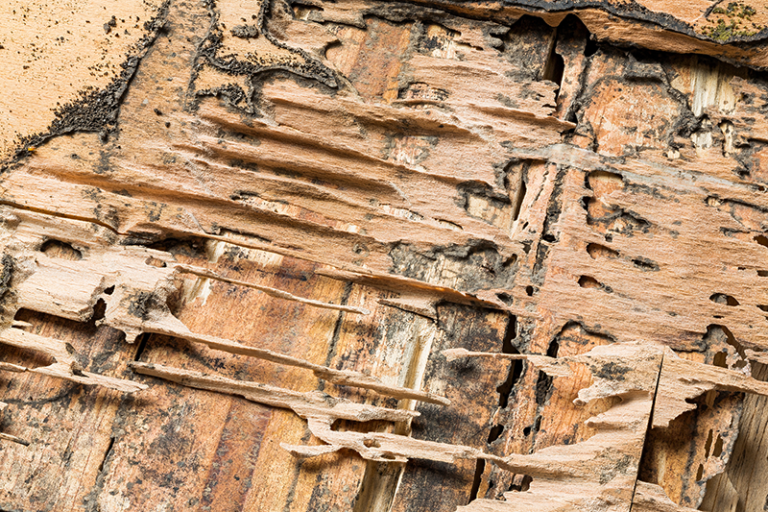
Subterranean termites are the most common concern in the region. They live in the soil and travel up into a house through pencil-width mud tubes built along foundation walls, piers, and sill plates. Our inspectors look for those tubes, along with discarded wings near windows and doors, hollow-sounding wood, and the layered, honeycomb pattern termites leave behind when they eat wood from the inside out. Carpenter ants don’t eat wood, but they excavate it to build nests, leaving small piles of sawdust-like debris called frass. Wood-boring beetles leave tiny exit holes and fine powder. Carpenter bees drill perfectly round holes, usually in fascia boards, eaves, and decks.
During the inspection, we examine the accessible areas where these insects tend to show up first. This includes the basement or crawlspace, foundation walls, sill plates, floor joists, support posts, garages, porches, decks, and the home’s exterior perimeter. We also look at what’s around the house. Mulch piled against siding, firewood stacked next to the foundation, wood touching soil, leaky gutters, and damp crawlspaces all make a home more attractive to moisture-loving insects that need easy access.
It helps to understand what a WDI inspection is and what it isn’t. It is a non-invasive visual inspection. Our home inspectors don’t open walls, pull up flooring, or move stored belongings, so insect activity hidden behind finished surfaces may not be visible. We also don’t treat infestations. If we find evidence of active insects, we’ll document it carefully so you can bring in a licensed pest control company for treatment. Our job is to give you accurate, unbiased findings, not to sell you a service you don’t need.
Your report will note any visible evidence of wood-destroying insects, whether that evidence appears active or from a past infestation, any visible damage we observe, and signs of previous treatment. We include photos and plain-language notes so you aren’t left decoding jargon. When a lender requires a specific form, such as the NPMA-33, we can explain how it fits into your transaction.
Importance of Wood-Destroying Insect Inspections
Most homeowners insurance policies don’t cover termite damage. Insurers generally treat it as a maintenance issue rather than a sudden event, so repair costs usually fall squarely on the owner. Depending on how long an infestation has gone unnoticed, that can mean replacing sill plates, sistering joists, or rebuilding sections of a porch or deck, and finding the problem before closing changes the conversation completely. You can ask the seller to handle treatment and repairs, negotiate the price, or decide the house isn’t the right fit.
The housing stock in our service area makes this especially relevant. Philadelphia is full of rowhomes and twins built close together, often with shared walls and connected foundations, which means insects in one property can find their way into the next. Older homes in Reading, Allentown, and Pottstown frequently have stone or brick foundations with gaps and mortar joints that termites can slip through. Farmhouses and outbuildings around Lancaster and West Chester often have original timber framing, wood siding, and decades of exposure to the elements. Even newer construction isn’t off the hook, since landscaping, grading, and wood-to-soil contact can create openings almost immediately.
Timing matters too. Subterranean termites send out winged swarmers in spring, often between March and May, and a single swarm inside a home strongly suggests a mature colony nearby. The rest of the year, the colony keeps working quietly. A home can look perfectly fine during an October showing and still have active termites in the framing. A WDI inspection looks beyond the surface for the clues that don’t depend on the season.
There’s also a practical side for financing. Some lenders and loan programs require a wood-destroying insect inspection before they’ll approve a mortgage, particularly in areas where termite activity is common. Having a home inspector who can handle both the general home inspection and the WDI inspection keeps your timeline simpler and puts the information in one place.
For current homeowners, periodic termite inspections are good maintenance. Catching activity early typically means a smaller treatment area, less structural damage, and lower repair costs. It’s much easier to address a few mud tubes along a basement wall than a floor system hollowed out over several years.
Why Choose Us for Your Wood-Destroying Insect Inspection?
Homer Inspection Services has spent years inspecting homes across southeastern Pennsylvania, northern Delaware, and nearby Maryland, and that local experience shows up in the details. Our home inspectors know how termites move through Philadelphia rowhome foundations, where carpenter ants like to settle in older Main Line homes, and which crawlspace conditions tend to cause trouble in the Lehigh Valley. We take our time, explain what we’re seeing as we go, and welcome your questions throughout the inspection. Our reports include clear photos and straightforward explanations, and we’re happy to walk through the findings with you afterward so you know exactly what they mean for your purchase or your home.


Schedule Your Wood-Destroying Insect Inspection in Philadelphia, PA Today
If you’re buying, selling, or want peace of mind about the home you already own, a wood-destroying insect inspection is a smart, affordable step. Our inspectors serve Philadelphia, Lancaster, Allentown, Reading, Wilmington, West Chester, Pottstown, and the surrounding areas, and we make it easy to pair this service with others for a more complete look at the property.
In addition to WDI inspections, Homer Inspection Services offers general home inspections, radon gas testing, sewer camera inspections, private well inspections, water quality testing, mold inspection and testing, and walk-through consultations. Combining services means fewer appointments and a fuller understanding of the home’s condition, all from one team of experienced home inspectors.
Reach out today to schedule your wood-destroying insect inspection. We’ll help you find out what’s going on inside the wood so you can move forward with confidence.
